Understanding Radon
Understanding Radon and Why It Matters.
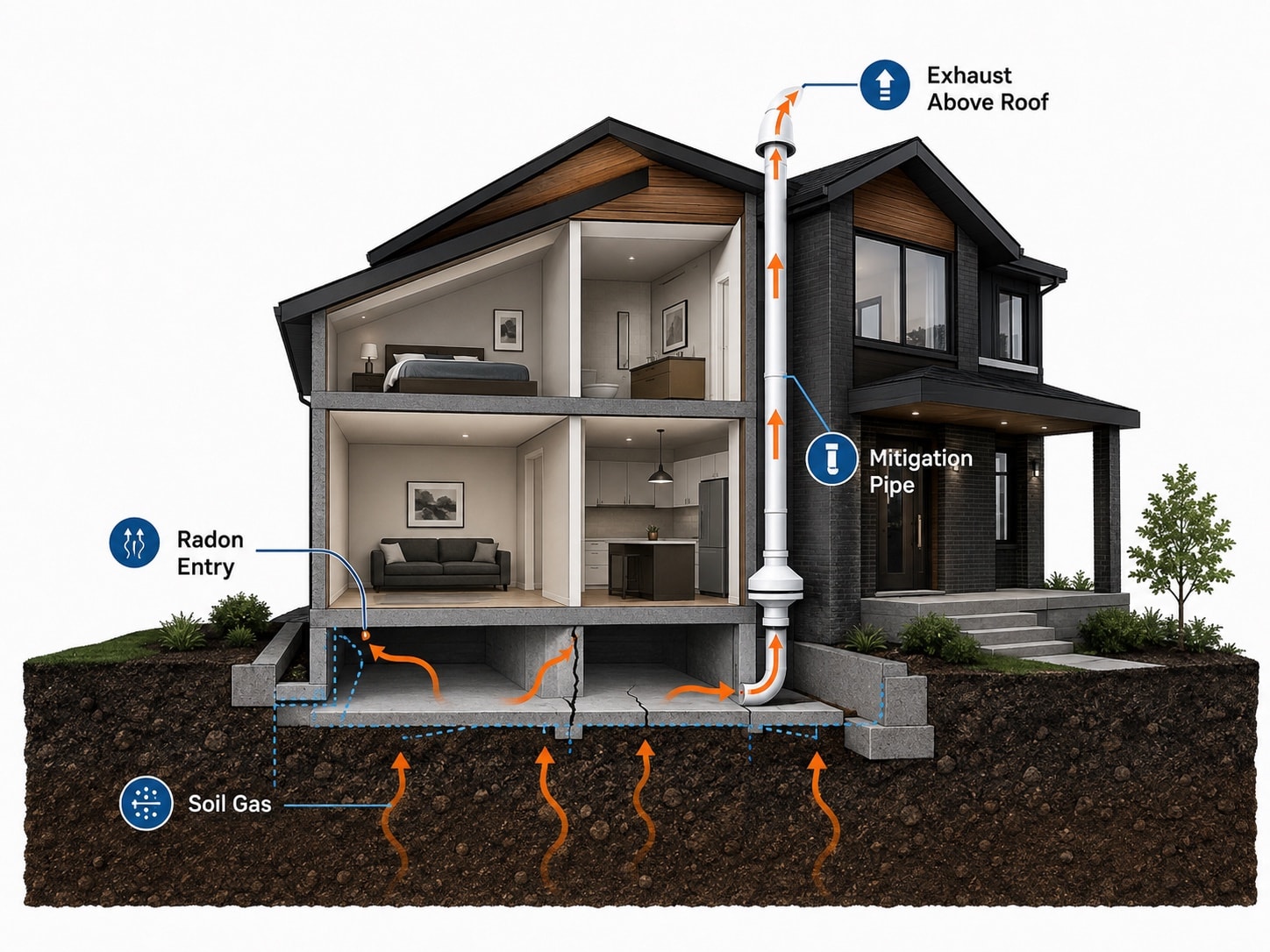
Radon is a naturally occurring radioactive gas that forms in the soil and can enter buildings through openings in slabs, crawlspaces, joints, and other pathways. Because it is colorless and odorless, radon can build up without any visible warning signs.
What Is Radon?
Radon is produced by the breakdown of uranium in soil and rock. It can move through the ground and enter homes, apartments, and other buildings. Once indoors, radon can accumulate to elevated levels if the building traps the gas.
Colorado is one of the states where radon can be a significant concern. Because geology, soil conditions, and building construction vary by location, radon levels can differ from one building to another, even in the same neighborhood.
Health Risks
Why Radon Is a Health Concern
Long-term exposure to elevated radon levels is associated with an increased risk of lung cancer. Because radon cannot be seen or smelled, understanding the risk and knowing whether a building has elevated levels is important for long-term indoor air quality and occupant health.
EPA Guidelines
EPA Action Level
The national average indoor radon level is about 1.3 pCi/L. Below 2 pCi/L is considered low, though the EPA notes there is no completely safe level of radon.
The EPA recommends considering mitigation if levels are between 2 and 4 pCi/L, particularly for long-term occupants.
The EPA action level is 4.0 pCi/L. When indoor radon levels are at or above this level, mitigation is recommended. Many property owners also choose to reduce lower levels whenever practical.
Levels above 8 pCi/L represent a significantly elevated risk. Mitigation should be completed as soon as possible.
EPA recommendation: Fix your home if the radon level is 4 pCi/L or higher. Consider fixing between 2–4 pCi/L. The EPA notes there is no completely safe level of radon exposure.
Colorado & Radon
Radon in Colorado
Colorado is one of the states where radon can be a significant concern. Because geology, soil conditions, and building construction vary by location, radon levels can differ from one building to another, even in the same neighborhood.
The Denver metro area, including Aurora, Lakewood, Littleton, Centennial, and surrounding communities, has a high proportion of homes with radon levels above the EPA action level of 4 pCi/L.
Testing
Common Radon Testing Types
Although Professional Radon Solutions does not offer radon testing as a service, it can be helpful to understand the common testing approaches.
Short-Term Testing
A shorter test period used to get an initial indication of radon levels.
Long-Term Testing
A longer measurement period that gives a broader picture of average radon conditions over time.
Real Estate Testing
Testing performed during a home sale or transaction, often under defined timing and reporting conditions.
Need Help With a Radon Mitigation Solution?
If you already know your building needs mitigation, we can help design and install the right system.